Understanding the Impact of Ethics Investigations on ABA Practitioners
Ethics investigations can profoundly affect BACB certificants—even when cases close without a finding of wrongdoing. This article explores recent research on what practitioners experience during and after an investigation, from emotional distress to career disruption. Whether you supervise staff, manage a clinic, or work directly with clients, understanding these stress points can help you build better supports and safer systems before problems arise.
What is the research question being asked and why does it matter?
This paper asks what it is like for BACB certificants to go through an ethics investigation, and what happens to them during and after the process.
It matters because an investigation can change a person’s job, license, income, and mental health—even if the case closes with no violation. If you supervise or manage staff, someone on your team may face a complaint at some point, especially as the field grows and more states regulate practice. Knowing the common stress points can help you set up better supports and safer systems before problems happen.
The paper also examines whether people feel the process is fair and clear. When people do not understand what is happening, they may shut down, avoid asking for help, or make more mistakes while stressed.
The goal is not to decide who was “right,” but to learn what parts of the process tend to harm practitioners and what parts might help them improve. For day-to-day clinical work, this connects to how you document, supervise, and respond when something goes wrong.
What did the researchers do to answer that question?
The researcher used an anonymous online survey and collected answers from 14 BACB certificants who had been investigated or disciplined. Most were BCBAs, two were BCaBAs, and none were RBTs—so the findings mainly apply to analyst-level roles.
Participants answered background questions (like years certified and who investigated them) and then wrote responses to three required open-ended questions about their experience, supports, and impacts.
The researcher grouped the written answers into themes using thematic analysis. Three main themes emerged: strong emotional stress, frustration with how the process was handled (like poor communication), and in some cases growth afterward (often linked to supervision or mentorship).
Outcomes varied and included cases closed with no violation, warnings, required supervision or coursework, suspension, and revocation. Because this is a small, self-selected sample, treat it as “what can happen,” not “what usually happens.”
How you can use this in your day-to-day clinical practice
Build your practice systems as if an outside reviewer will read them—because they might. This study included complaints tied to supervision documentation, billing concerns, case transitions, and multiple relationships. Your best protection is boring, steady habits: clear notes, clear supervision records, clear boundaries, and clear handoffs. Do not wait until there is a complaint to discover gaps.
Treat supervision documentation like a clinical skill, not paperwork that gets done “later.” Several cases involved lost hours or documentation problems. Set a routine where supervision notes, meeting agendas, and follow-up tasks are finished the same day whenever possible.
If you supervise, teach your supervisees how to store records, name files, track client contact, and log supervision in a way that matches your payer and BACB requirements. This is not about fear—it is about protecting clients, staff, and the accuracy of care.
Plan for clean case transitions and endings. “Client abandonment” and “failure to transition cases” showed up among the reasons for investigations. Use a written transition plan when a case moves to a new clinician or when services are ending. That plan should include what the family was told, what supports were offered, what dates matter, and what risks you considered (like safety concerns or skill regression). This protects the client first, and it also protects you.
Reduce billing risk by making your billing process easy to check. Billing fraud allegations were common in this small group. If you work in a setting where you do not control billing, you still need a way to confirm that what you sign matches what happened.
In your day-to-day workflow, match your service notes to your schedule and billed code, and fix errors quickly in writing. If productivity demands push you toward rushed work, name that risk out loud in supervision and to leadership. “Pressure” does not erase responsibility, but it does signal a system problem that should be corrected.
Hold firm boundaries around multiple relationships and conflicts of interest. Multiple relationships came up as a reason for investigation. Screen for conflicts at intake and again when situations change—like staff becoming friends with a caregiver, or a supervisee being related to someone on the case.
When a boundary risk appears, do not rely on memory or verbal conversations alone. Document your decision-making, the options you considered, and the steps you took to reduce harm, including client choice and privacy.
Do not assume that “no violation found” means “no impact.” Some people in this study had cases closed and still reported major anxiety, isolation, and trouble working. If someone you supervise is under investigation, expect their focus, sleep, and confidence may drop.
Adjust your supervision plan: reduce extra tasks when possible, tighten checklists, and focus on high-risk items like documentation quality, communication with families, and boundaries. This is not coddling—it is risk management plus basic care for a stressed human.
Create a support plan before anyone needs it. People in this study often described feeling alone and “in the dark.” As a supervisor or clinical director, set up a simple protocol: who the staff member can talk to, how to protect client confidentiality while seeking support, and what the company will do about caseload, schedule, and communication.

Encourage clinicians to get their own legal and mental health advice when needed, but do not act like you are their attorney or therapist. Your role is to support good clinical decisions, ethical practice, and client safety.
If mandated supervision or mentorship happens, make it truly useful—not just a hoop. Some participants said required supervision helped them rebuild skills and confidence, while others struggled. Treat mentorship goals like any other behavior plan: clear targets, practice, feedback, and real examples from the clinician’s cases. Make space for values like dignity and client choice, not just “don’t get in trouble again.” A growth-focused plan can still be accountable without becoming shame-based.
Set expectations with staff about what an investigation process can feel like. This study suggests the hardest parts were long waits, unclear communication, and not being able to talk to a real person. Prepare staff for the idea that official processes can be slow and stressful, and that the best response is calm, organized, and timely. Coach them to keep copies of what they submit, track dates, and avoid venting about details in ways that could harm clients or violate privacy.
Use this study as a reminder to strengthen prevention, not as a reason to practice scared. The sample is small, does not include RBT perspectives, and cannot tell you how common any experience is. Still, the themes point to practical steps: tighten high-risk systems, support early-career staff, and respond to ethical problems early. Use clinical judgment, consider your setting’s rules, and center client welfare and dignity when you decide what to change.
Works Cited
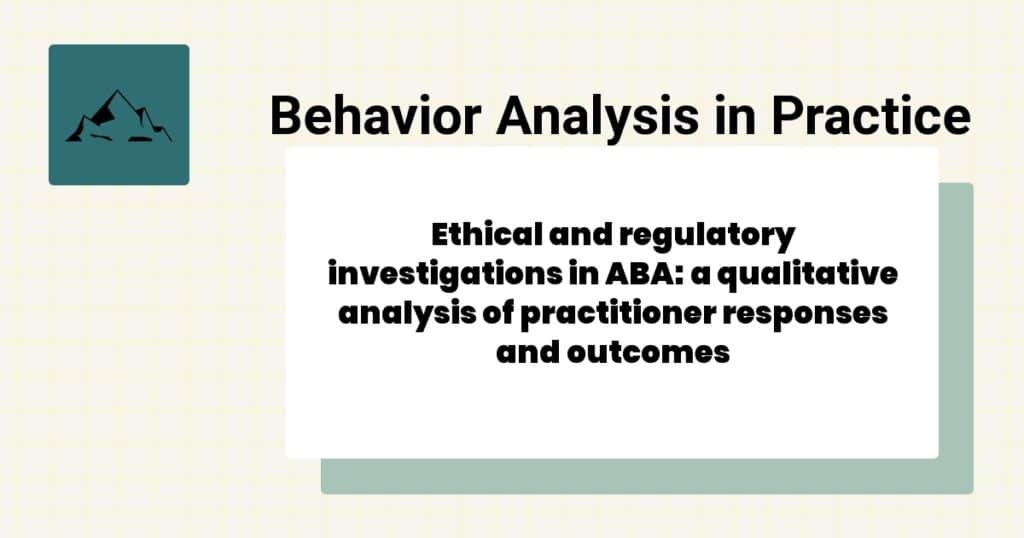
Voulgarakis, H. M. (2025). Ethical and regulatory investigations in ABA: A qualitative analysis of practitioner responses and outcomes. Behavior Analysis in Practice. https://doi.org/10.1007/s40617-025-01134-0